Electrical Engineer resume example
Electrical engineering resumes should show the whole board lifecycle — schematic, layout, bring-up, qualification — and the specialty (analog, digital, RF, power, mixed-signal). Tools and specifications matter: cite the lab equipment and the standards you've qualified to.
How to write a strong electrical engineer resume
- 1Specify your specialty in the first line of your summary: analog, digital, mixed-signal, RF, power electronics.
- 2For each board: list node count, layer count, and whether you owned schematic, layout, or both.
- 3Name the simulation tools (Cadence, Altium, ADS, LTSpice) and lab instruments.
- 4Qualification / compliance work (FCC, CE, UL, MIL-STD) deserves its own line per standard.
- 5If you've shipped product: cite units produced and yield percentages.
Sample experience bullets for electrical engineers
Copy these as a starting point and adapt with your own numbers. Every bullet is written to read well in an ATS and on a recruiter skim.
- ▸Owned schematic + 12-layer PCB layout for a 48V-to-12V automotive DC-DC converter; hit 96.5% peak efficiency, passed CISPR 25 Class 5 on first spin.
- ▸Led hardware bring-up for a mixed-signal SoC eval board; debugged three silicon issues over 6 weeks to unblock production tape-out.
- ▸Ran FCC Part 15 Class B pre-compliance sweeps in-house; saved approximately $80k in external-lab iteration cost.
- ▸Designed gate-driver circuit for a 10kW SiC inverter; shipped 1,800 units in 2024 at 99.2% first-pass yield.
Recommended templates for electrical engineers
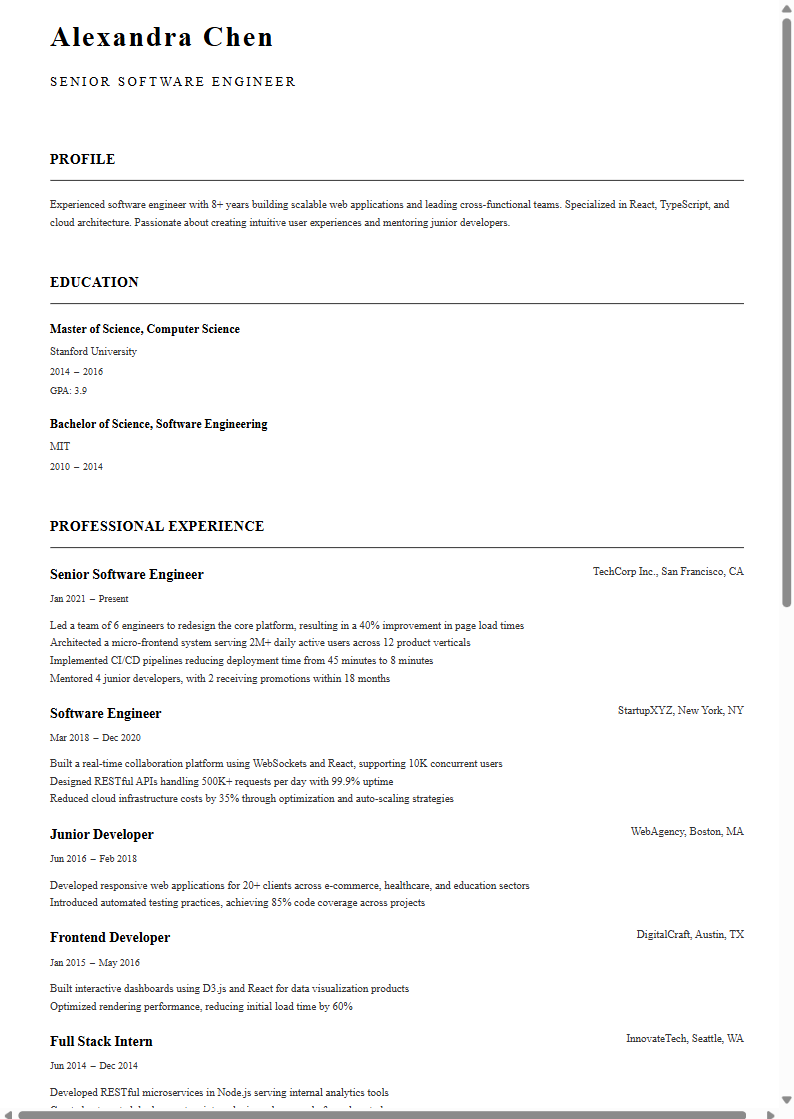
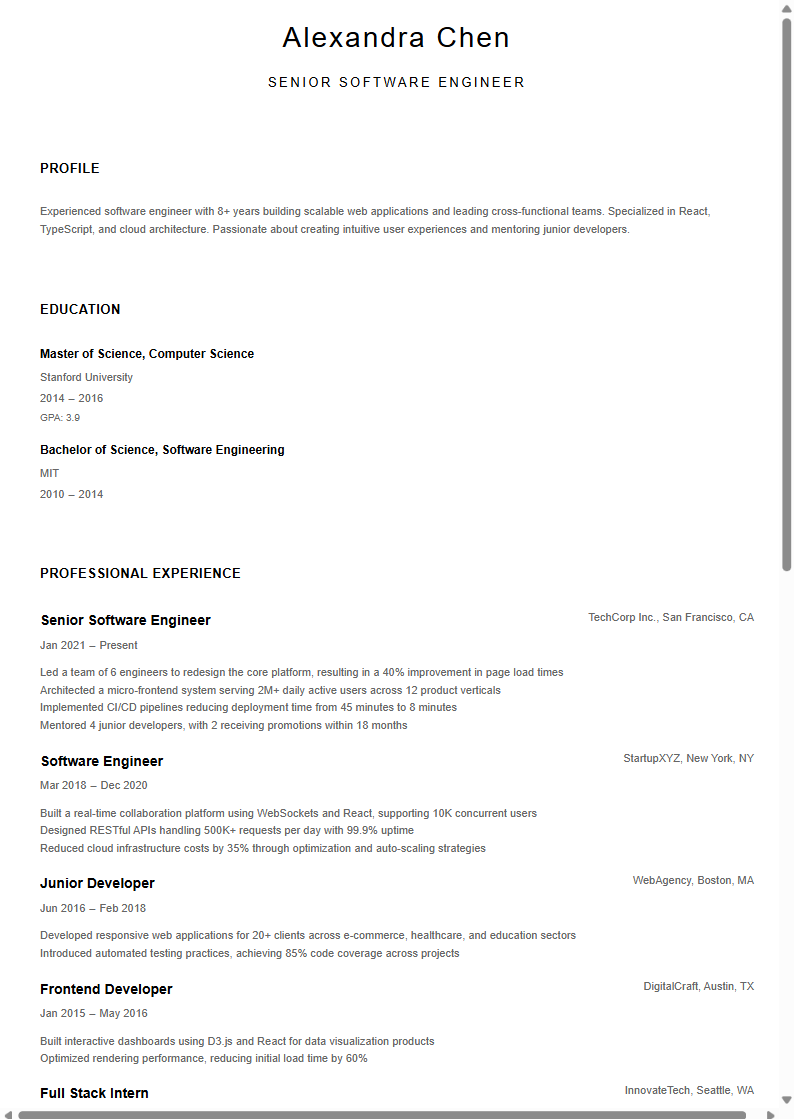
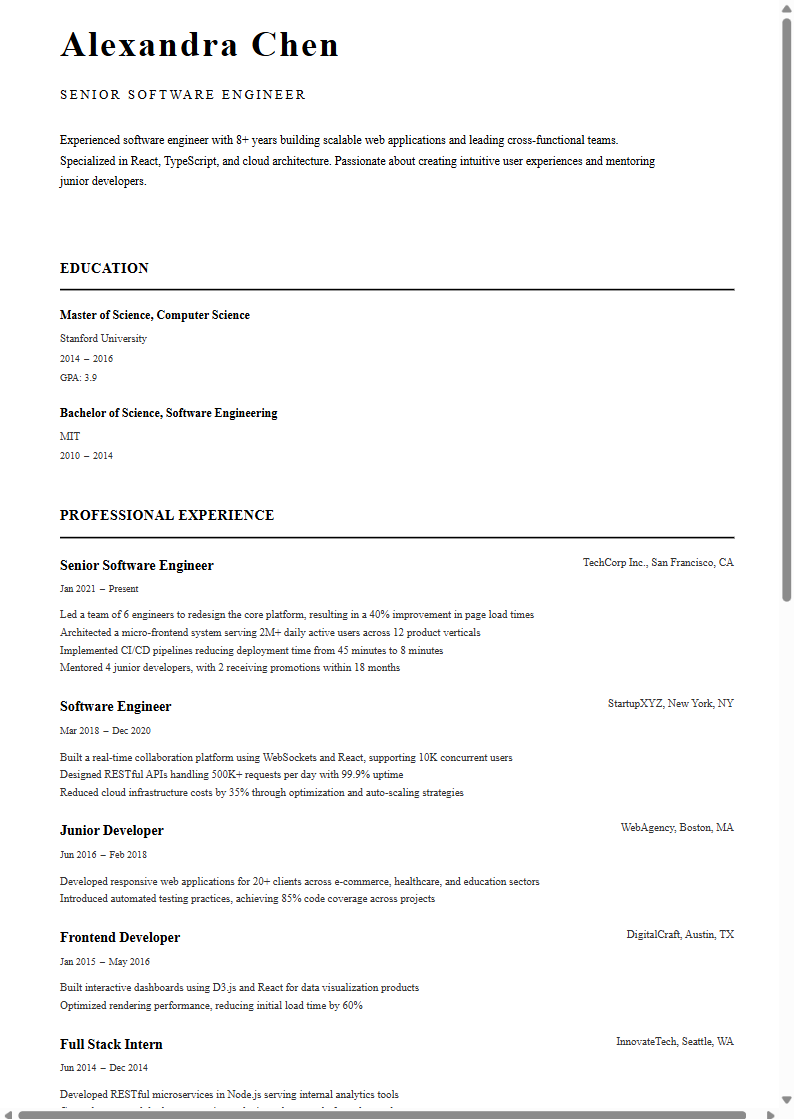
These templates pair well with the electrical engineer role — they're ATS-friendly, appropriate in tone, and highlight the sections that matter for this kind of job.
Ready to write your electrical engineer resume?
Start from one of the recommended templates above. You can switch templates any time without losing your content — and the AI will help you adapt each bullet to the specific job description.
Start building — it's free