Data Scientist resume example
Data science resumes reward the candidate who can translate modeling work into business outcomes. The trap is listing algorithms (XGBoost, BERT, etc.) without context — hiring managers want to see the problem, the dataset, the approach, and what changed in production because of your model.
How to write a strong data scientist resume
- 1Frame projects as: problem → data → approach → impact. Every bullet should touch at least three of those four.
- 2Call out data scale: 'Trained on 40M events' is a signal. 'Trained a model' is not.
- 3Distinguish research prototypes from shipped production systems. Recruiters care deeply about the difference.
- 4List tools under a Skills section, but group them: Languages (Python, SQL), ML (PyTorch, XGBoost), Data (Spark, dbt).
- 5If you publish: include a link to Google Scholar or a personal site, not just paper titles.
Sample experience bullets for data scientists
Copy these as a starting point and adapt with your own numbers. Every bullet is written to read well in an ATS and on a recruiter skim.
- ▸Built churn model (gradient boosting over 80+ features) that drove 14% lift in retention-campaign ROI across 2.4M users.
- ▸Owned A/B experiment platform used by 18 teams; reduced average experiment analysis time from 4 days to 20 minutes.
- ▸Shipped fraud detection service handling 8k events/sec with 92% precision at 30% recall, saving an estimated $3.2M/yr.
- ▸Published two papers at KDD workshops on causal uplift modeling; code open-sourced (1.3k GitHub stars).
Recommended templates for data scientists
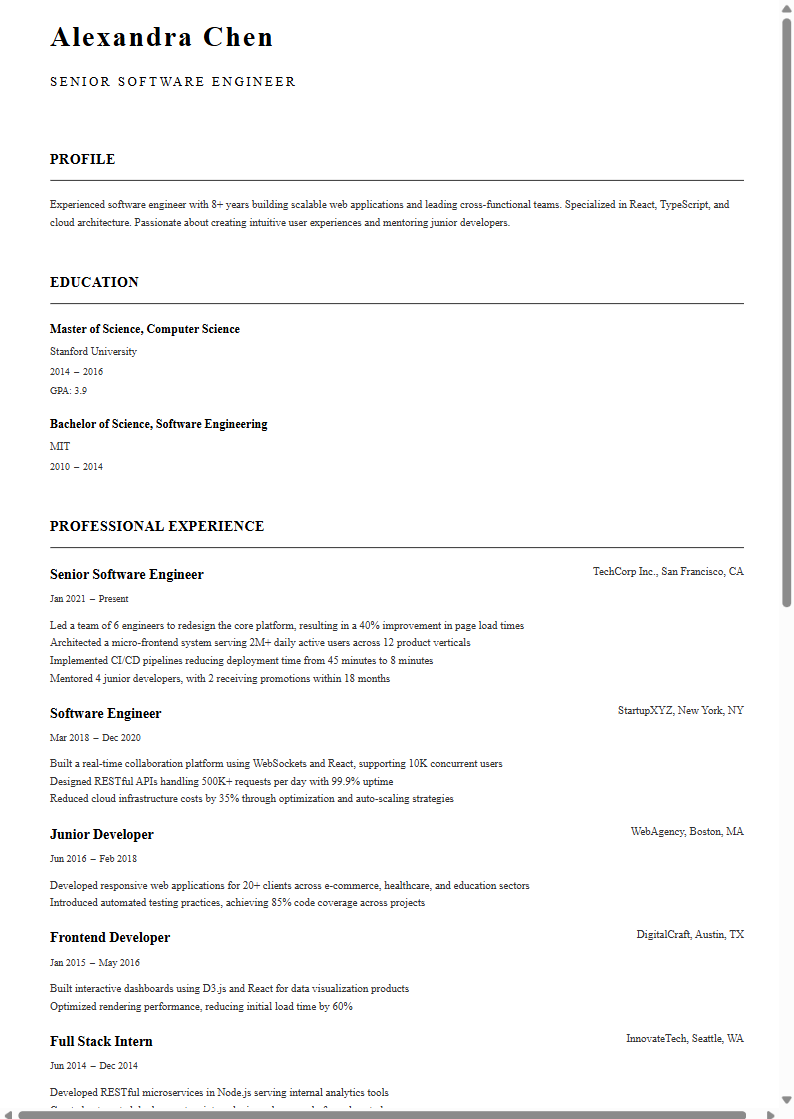
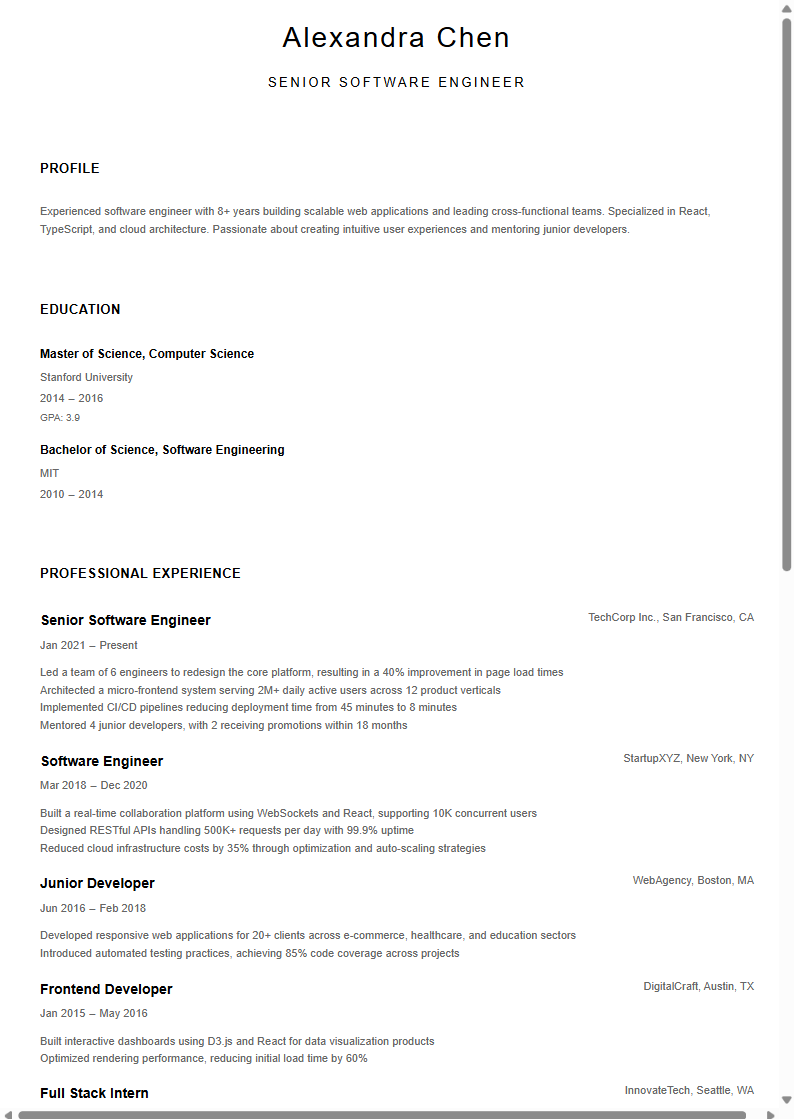
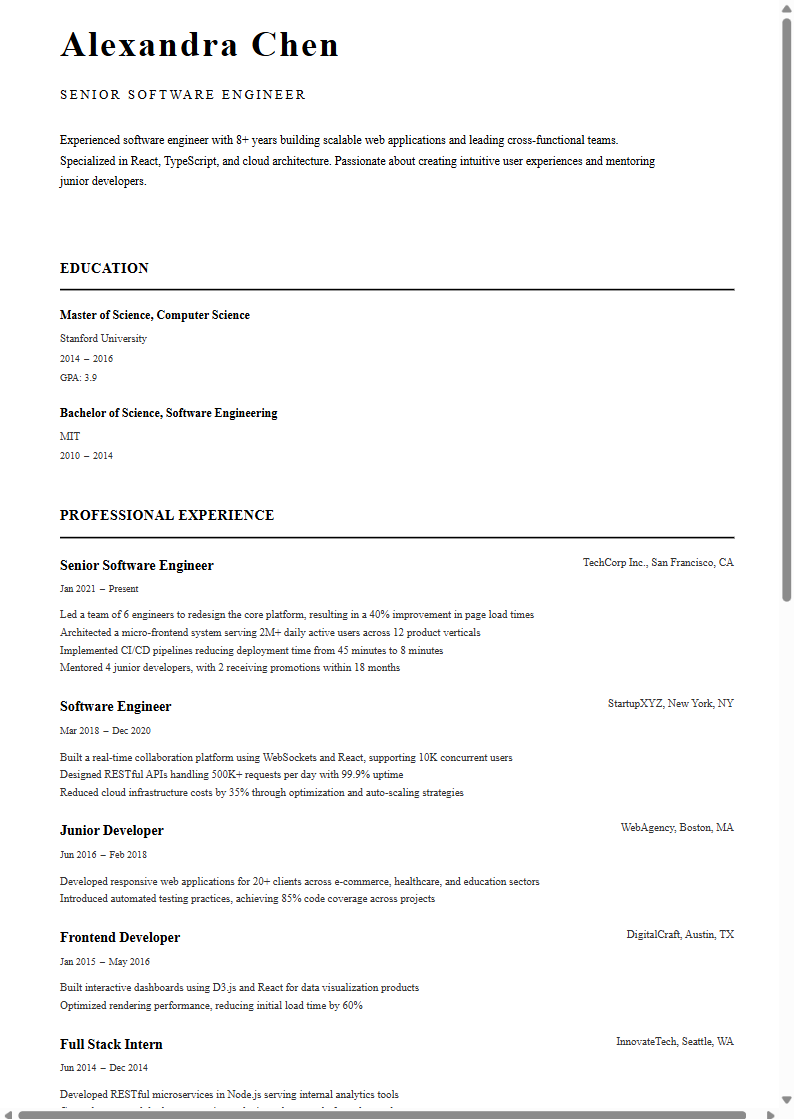
These templates pair well with the data scientist role — they're ATS-friendly, appropriate in tone, and highlight the sections that matter for this kind of job.
Ready to write your data scientist resume?
Start from one of the recommended templates above. You can switch templates any time without losing your content — and the AI will help you adapt each bullet to the specific job description.
Start building — it's free